
Glidance
The challenge was not another device.
This was a 16-week graduate strategy project with a 16-person design team working with Glidance, an assistive-technology company developing Glide for blind and low-vision people. We looked beyond the device to understand why so many people remain disconnected from mobility support, then translated that research into barriers, strategies, and a five-year concept roadmap.
I built the research foundation the concept team designed from.
I contributed through interviews and secondary research, helped draft the BARRIERS framework, and contributed to mapping the seven phases of adjustment to vision loss. I then translated those research insights into strategy guidance the concept-creation team could use to strengthen their ideas.
Timing changes what support should look like.
Diagnosis and early adjustment emerged as a critical window for building trust before stigma, fear, and dependence become harder to shift.
Assistive technology can feel too confronting when someone has not accepted the change yet.
Eight barriers became eight bridges.
I helped draft the BARRIERS framework from primary and secondary research, then translated each barrier into a strategic bridge for the concept team. Select one to see how the research changed the design response.
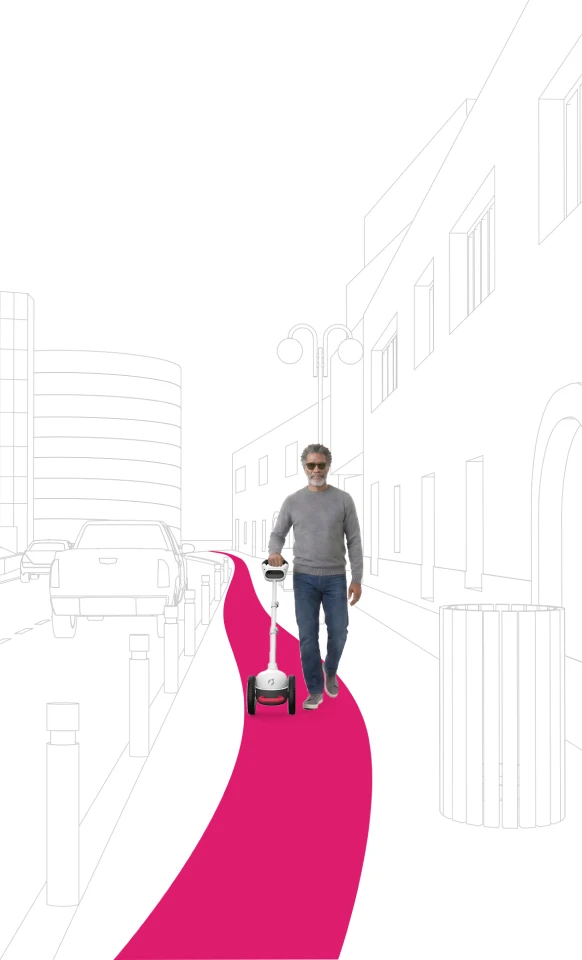
Physical, environmental, and access limits can narrow how and where mobility tools fit into daily life.
Research became a five-year roadmap.
My role was to give the concept team a stronger research foundation. The broader team used the barrier framework and strategy guidance to generate 100+ ideas, narrow them into 11 concepts, and organize the work across three horizons: Crawl, Walk, and Run.
Spread awareness of Glidance to BLV people, caregivers, and communities.

Build trust before the adoption decision.
Our strongest direction was to introduce mobility support earlier, through trusted settings, caregivers, peer stories, and clearer information pathways.
From classroom synthesis to presenting directly to Glidance.
We presented the research, BARRIERS framework, 7-phase adjustment journey, strategy directions, and roadmap directly to Glidance stakeholders. My presentation contribution centered on the research synthesis and the frameworks that informed later concept development.



Research became a filter for stronger concepts.
The barrier framework gave the concept team a way to ask whether an idea addressed a real adoption barrier, fit a phase of adjustment, connected to the BLV ecosystem, and created value for both people and Glidance. That was the most important output of my contribution.